
Understanding the AAC Key Visual
Assessment is like a road trip
The Alberta Assessment Consortium’s Key Visual describes classroom assessment as three interconnected phases: Planning with the End in Mind, Formative Assessment, and Summative Assessment. These phases are consistent with the Alberta Teaching Quality Standard, and they work together to support student learning.
One helpful way to understand this relationship is to think of assessment like using GPS on a road trip.
Use this visual guide for an overview of the 3 phases of sound classroom assessment practice.
The Alberta Assessment Consortium’s Key Visual describes classroom assessment as three interconnected phases: Planning with the End in Mind, Formative Assessment, and Summative Assessment. These phases work together to support student learning.
One helpful way to understand this relationship is to think of assessment like using GPS on a road trip.
Planning with the End in Mind: Clarifying the Destination
When we begin a road trip, the first thing we do is enter our destination into the GPS. This ensures we know where we are going before we start driving.
In assessment, planning with the end in mind serves the same purpose. Teachers identify the learning outcomes to ensure there is clarity about what students are expected to know, understand, and be able to do. This is not a solitary endeavour, it benefits from collaboration with colleagues to build shared understanding of standards and expectations.
Once the destination is clear, the next question naturally follows:
How will we know when students have arrived?
To answer this, teachers begin planning assessments that will provide accurate evidence of learning aligned to the outcomes.
Effective planning also requires careful consideration of who the learners are and the context in which learning occurs. Just as no two road trips are identical, what works in one classroom may not work in another. Students’ strengths, needs, backgrounds, and experiences must be considered when designing assessment experiences.
Importantly, this destination must be communicated clearly to students. When learners know where they are going, they are better able to monitor their progress, make adjustments, and take ownership of their learning along the way.

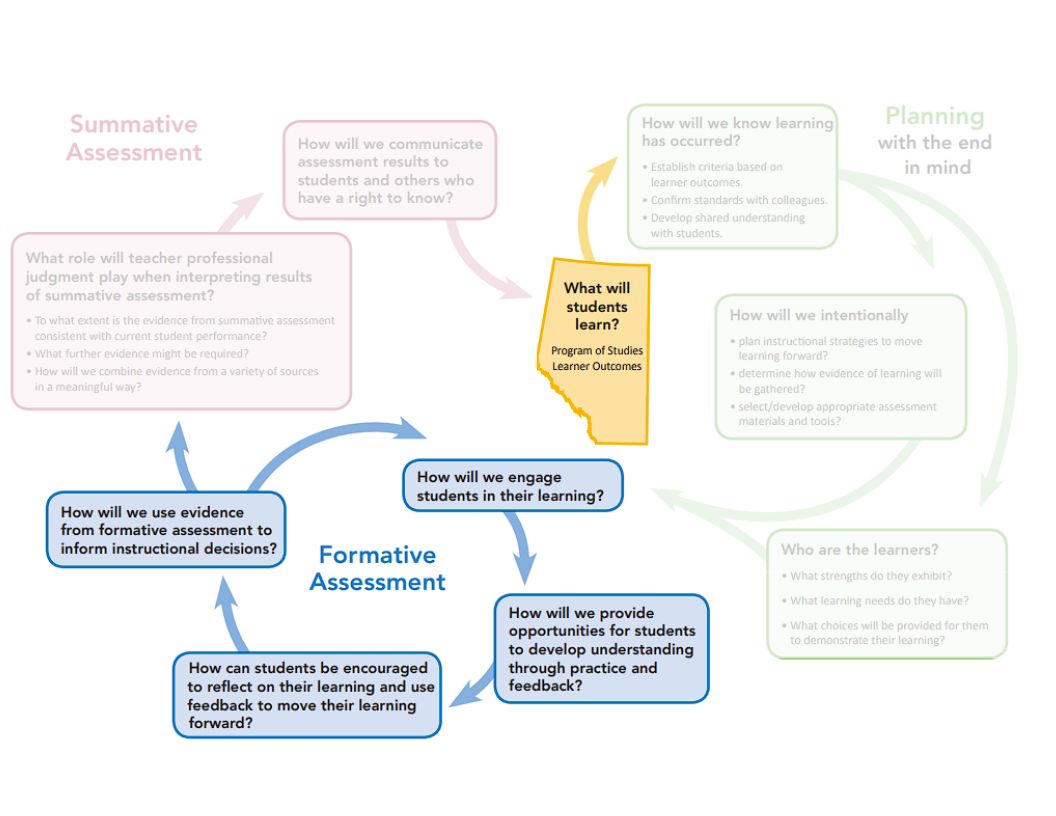
Formative Assessment: Monitoring the Journey
If planning is entering the destination into the GPS, formative assessment is checking the map along the way to confirm we are on the right route.
At this stage, teachers and students gather evidence to answer key questions:
How far have we come? What obstacles are we encountering? What adjustments are needed to stay on course?
Formative assessment is a shared responsibility. Students are encouraged to self-monitor, reflect on feedback, and identify next steps therefore developing the self-regulated learning skills that are central to deep learning.
This stage provides multiple opportunities for practice, allowing students to refine knowledge, skills and understanding before summative assessment occurs. Teachers act much like coaches, observing, guiding, and providing timely, descriptive feedback that feeds learning forward. Effective teachers continuously use formative assessment to support improvement.
One of the most significant shifts in assessment practice is this emphasis on formative assessment—not as a checkpoint for marks, but as a process designed to improve learning.
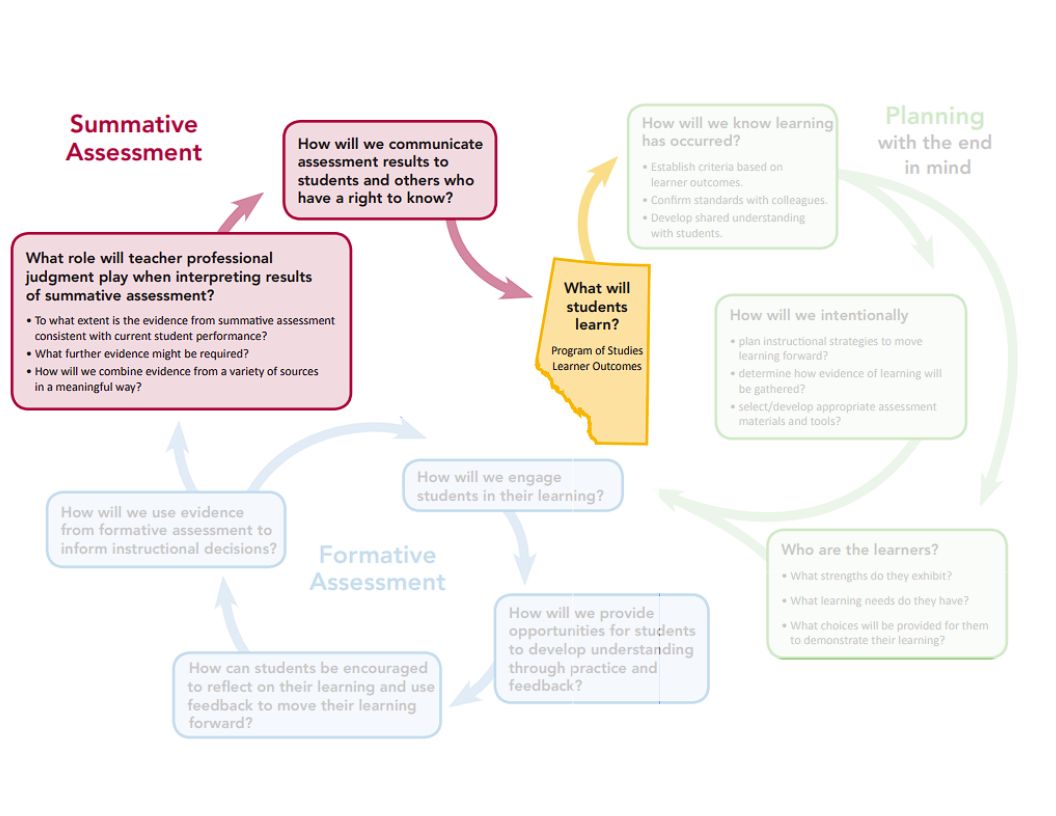
Summative Assessment: Arriving at the Destination
If planning is clarifying the destination and formative assessment is checking progress along the way, summative assessment is pausing to review the route to ensure we have reached our intended destination.
Summative assessment is not just an endpoint, it’s a reflective stage where teachers and students verify that the intended learning outcomes have been met.
Teachers know it is time for summative assessment when students consistently demonstrate evidence of learning during the formative phase. It’s important to recognize that mastery may look different for different students, but summative evaluation is made using sound professional judgment grounded in evidence.
Summative assessment is meaningful and trustworthy when it:
-
Is aligned to the learner outcomes identified during the planning stage
-
Focuses on the cognitive demand of the outcomes (the verbs matter)
-
Draws on multiple sources of evidence, triangulated over time
-
Reflects authentic learning, often connected to the 4 Cs of quality assessment: critical thinking, creativity, communication, and collaboration
Finally, summative assessment results must be clearly communicated to students, parents, and others who have a right to know, accurately representing what students have learned while supporting continued growth.
Bringing It All Together
Just as a successful road trip depends on knowing the destination, monitoring progress, and making informed decisions along the way, sound classroom assessment depends on the dynamic relationship between planning, formative assessment, and summative judgment.
The AAC Key Visual makes this relationship visible and supports educators in designing assessment that is intentional, responsive, and focused on learning.
Dimensions of Sound Classroom Assessment Practice
The Dimensions of Sound Classroom Assessment Practice provide a detailed description of ten interrelated components of classroom assessment.
Dimensions Document – English (PDF download)
Dimensions Document – French (PDF download)