
Making Report Cards Parent Friendly
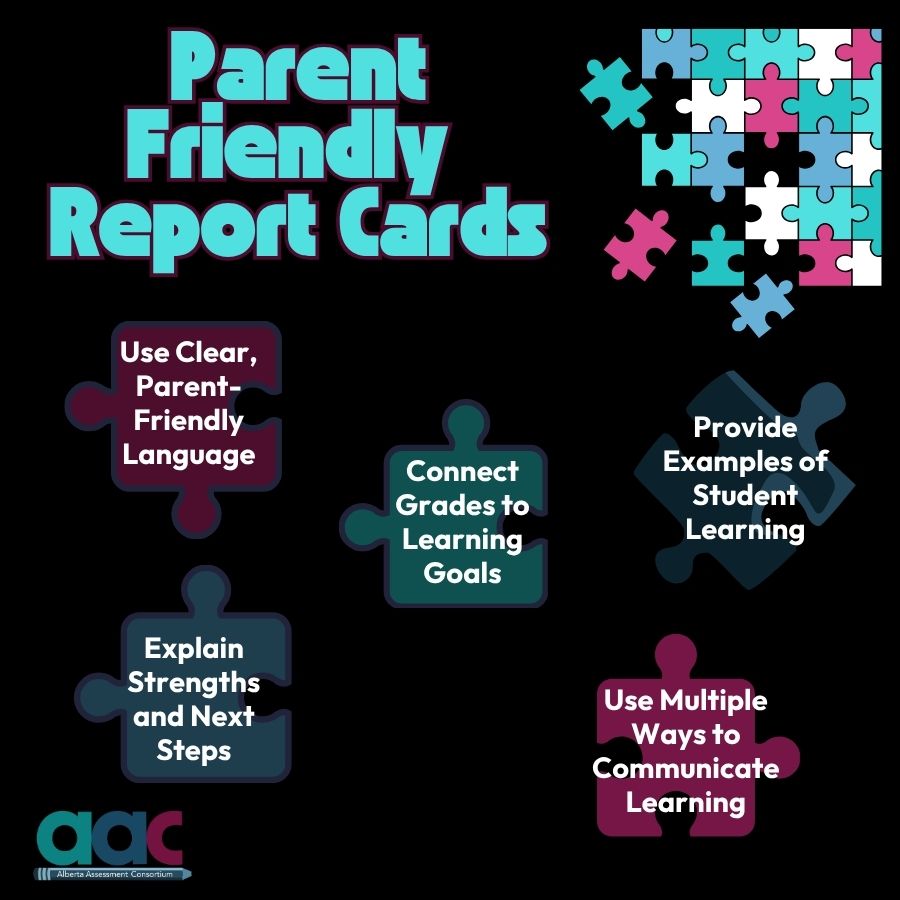
Helping Parents Understand Performance Standards
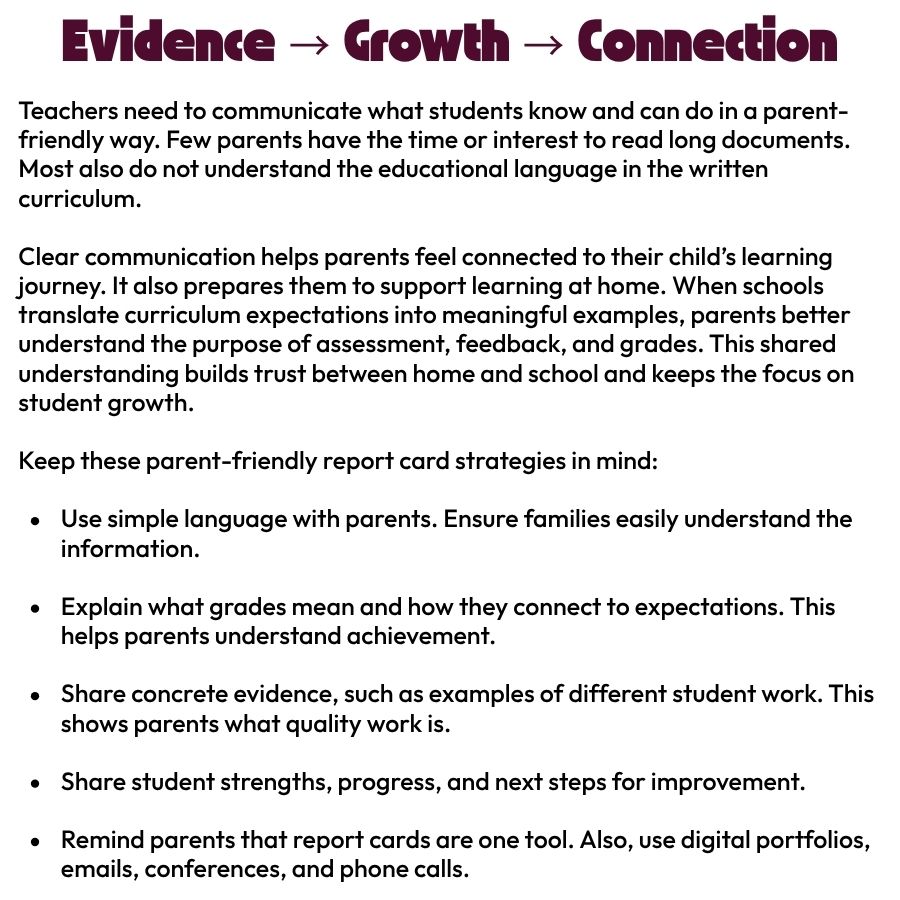
Performance standards are a shared understanding of student learning at different quality levels. Without this understanding, grades and feedback can be misread as compliance or effort rather than as evidence of achievement.
- Communication between home and school becomes clearer. Instead of saying a student is “doing well” or “struggling,” families see what proficient work looks like. Using exemplars and their understanding of quality descriptors, they can compare quality, identify missing elements, and understand growth in concrete terms.
- When parents know the criteria, they support at-home practice aligned with classroom expectations. Support shifts from helping with homework to reinforcing quality in communicating, problem-solving, and understanding.
- More conversations about student growth occur. Parents feel more confident in asking, “What does the next level look like?” How does my child’s work compare to exemplars? What evidence shows improvement? What feedback matters most now?
Performance standards and exemplars show that grades are based on evidence of learning and criteria. Grades reflect achievement, not behaviour, effort, or comparison. This transparency builds trust in the assessment.
AAC Members Only Content
Note: This content area is available to AAC Members Only. Please login or learn more about Membership.
Providing a Meaningful Summary of What Students Know and Can Do
AAC Members Only Content
Note: This content area is available to AAC Members Only. Please login or learn more about Membership.
AAC Members Only Content
Note: This content area is available to AAC Members Only. Please login or learn more about Membership.
AAC Members Only Content
Note: This content area is available to AAC Members Only. Please login or learn more about Membership.
Collecting Consistent Evidence about Student Behaviour
These videos explore key considerations in assessment and reporting, including clearly communicating student learning, separating achievement from work habits and behaviour, and engaging stakeholders in reporting practices. Together, they highlight the importance of evidence-based assessment, meaningful communication with families, and reporting processes that support student learning and provide accurate, useful information to parents and caregivers.
AAC Members Only Content
Note: This content area is available to AAC Members Only. Please login or learn more about Membership.
AAC Members Only Content
Note: This content area is available to AAC Members Only. Please login or learn more about Membership.
AAC Members Only Content
Note: This content area is available to AAC Members Only. Please login or learn more about Membership.
AAC Members Only Content
Note: This content area is available to AAC Members Only. Please login or learn more about Membership.
AAC Members Only Content
Note: This content area is available to AAC Members Only. Please login or learn more about Membership.